A T-score of -1.0 doesn't feel like anything. No ache, no limp, no morning stiffness to tip you off. That's exactly what makes bone density such a sneaky problem for men past 50, which is why the fix for it has almost nothing to do with the kind of exercise most guys default to. Weight training, done a specific way, is the part nobody explained to me until a doctor's appointment I'd rather not repeat.
The real tipping point wasn't a lab result. It showed up on a random afternoon, climbing two flights of stairs at a friend's place and noticing, at the top, that the usual flinch in my knees never showed up. No bracing, no mental checklist, nothing. That absence was more convincing than any chart my doctor could have pulled up.
So I started asking the same questions most men ask once osteoporosis stops sounding like a grandmother's disease and starts sounding like their own chart.
Walking and Bone Protection
My golden retriever would vote yes, mostly because a vote for walking is a vote for more walking. Every morning she drags me around the loop at Washington Park like the leash is the only thing standing between her and a dead sprint — she's pushing seven in dog years and still outruns the both of us combined. For a while I told myself that counted as training. It didn't. Walking on flat ground is low-impact by design, and bones don't get denser from low-impact anything.
There's an old biological rule called Wolff's Law that explains why: bone adapts to the specific mechanical stress you put through it, and basically ignores everything else. Mild, predictable stress — a lap around the park, a stationary bike, a casual stroll with the dog — tells the skeleton to maintain, not build. To trigger new bone formation, you need load traveling down through your spine, hips, and long bones at something closer to your limit, not your cruising pace.
I found that out sideways, by swinging to the opposite extreme. For about three weeks, I set an alarm and ran most mornings before the dog even noticed I was gone, figuring more cardio had to beat none. My knees disagreed loudly enough that I quit before week four. Weight training does both jobs a walk or a run can't — it loads the skeleton hard enough to matter, and it lets you control exactly where that load lands instead of just pounding pavement and hoping.
Lifting for Bone Isn't the Same as Lifting for Muscle
Osteopenia and osteoporosis get thrown around like interchangeable scare words, but they're just two points on the same scale. A T-score between -1.0 and -2.5 puts you in osteopenia territory. Drop below -2.5 and it's officially osteoporosis. Those numbers come from a bone density scan, not a mirror, which is part of why so many men over 50 ignore the issue until a fracture forces the conversation — the National Osteoporosis Foundation puts the odds at roughly one in four men over 50 breaking a bone because of it, with worse recovery outcomes for men than women after a hip fracture.
Doug, an old coworker who forwards me a podcast link before six most mornings without so much as a "good morning," sent one a while back on bone loading research that lined up with what my own doctor had already said. Heavy, compound lifting beats isolated, high-rep machine work for this specific job, every time.
Here's where it gets specific. Most of what I've read on osteogenic loading points to roughly 70 to 80 percent of your one-rep max as the sweet spot — heavy enough that 5 to 8 reps is genuinely hard, not the kind of set you could grind out to 20. That rules out the light dumbbells and high-rep circuits a lot of over-50 guys default to out of caution. It also rules out ego lifting at the other extreme — loading a bar past what your form can control doesn't build bone, it just buys you a slow walk to the car for a few days.
Speed and Impact Matter
Look, Pete didn't want a science project out of this. He runs a landscaping crew outside Boulder and emailed me after reading something I wrote about aging joints, asking straight out whether he really needed to overthink his workouts or could just lift heavy and call it a day. Fair question. The honest answer is heavy alone is most of it, but not quite all of it.
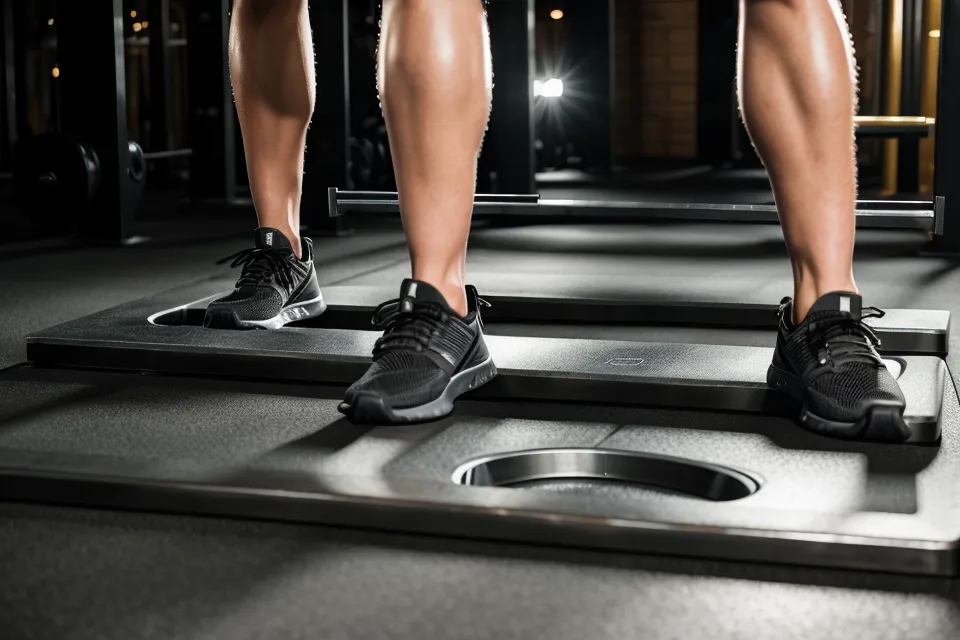
Bone responds to how fast force moves through it, not only how much force there is. A slow, heavy trap bar deadlift is excellent for hip and spine strength, but a short burst of impact — a heel drop, a low hop landing on a mat, a medicine ball slammed into a wall — sends a different, faster signal that a slow grind doesn't.
I started adding these before my working sets, nothing dramatic: twenty heel drops, a few low hops, done in a garage cold enough by January that I could feel the concrete through two pairs of wool socks before I'd even touched the bar. Small, controlled impact first. Heavy compound lifts second.
Building a Two-Day Weight-Training Routine That Won't Wreck Your Joints
What actually sticks, for me and for guys like Pete who don't want a second job out of their training, is two sessions a week, about forty minutes each. Start with five minutes of dynamic activation — heel drops, light hops, maybe some skipping if your knees tolerate it — to wake up the femoral neck and spine before any real weight goes on.
On the bar, that's a trap bar deadlift for three sets of five, loaded to around 75 percent of what I could pull for one rep, standing tall through the lockout instead of rounding anything. A goblet squat or Bulgarian split squat follows for three sets of eight, torso upright so the hips and knees take the load instead of the lower back. Standing overhead presses, three sets of six to eight reps, force the spine to brace and send that load straight down through the pelvis — something a seated press never asks of you. Loaded carries close things out: two moderately heavy dumbbells, walked tall for a few trips, which does double duty by improving grip strength after fifty while every stabilizing bone in the ankles and spine works to keep that weight from swinging.
A little core work belongs in there too, mostly for keeping the spine braced under a loaded bar rather than for how it looks in a mirror. On the off days, it's mobility instead of more lifting — resistance band exercises keep my shoulders moving without grinding down cartilage the way another heavy session would.
Fueling the Rebuild: Diet, Sleep, and the Other Boring Stuff
Weight training creates the demand for new bone, but it can't build anything without raw material. Calcium from actual food — sardines, leafy greens, Greek yogurt — along with enough vitamin D and K, covers half the equation most guys skip entirely. Protein matters more than most men over 50 assume too, though you don't need powders or shakes to get there; a bit more at each meal does the job quietly.
Sleep is the other half nobody wants to hear about, since that's when the body actually lays down new mineral matrix instead of just maintaining what's already there. A dry Denver winter doesn't help — higher altitude and lower humidity pull more water out of you than you'd expect, and dehydration doesn't do recovery any favors either. Sleep problems come from plenty of directions that have nothing to do with training — I've written elsewhere about better bladder control at night for guys whose 2 a.m. wake-ups keep wrecking a full night's rest — but however you get there, more consistent sleep means more consistent bone repair.
None of this requires turning your garage into a lab. Two sessions a week, loaded heavy enough to matter, with a little impact and decent sleep built around it, puts real force through the parts of you that actually need it. That's the whole plan — everything else is just showing up for it.