
What do you actually say when your doctor pauses, looks up from the chart, and asks if you have any questions? It's a fair question, and it's one most men over 50 fumble the second it's actually asked out loud in an exam room. I fumbled it for years without even noticing.
Look, I turned 52 last year, and nobody handed me a manual for any of this. I live outside Denver with my wife and a golden retriever who still has more energy at 6 a.m. than I have all day combined. My doctor has a favorite phrase — "well, at your age" — and I used to just nod along like it explained everything. It doesn't. It's a starting point for a conversation, not a permission slip to stop asking questions.
Preventive care only works if you actually show up with something to say, and that's basically the whole game with men's health once you're past 50. So a few weeks before this year's physical, I started paying attention to my own body on purpose instead of just showing up and hoping for the best.
What My Doctor Doesn't See in Twenty Minutes
My doctor gets a twenty-minute snapshot of my life once a year. He doesn't see the 3 p.m. crash where I'm tempted to face-plant into my keyboard, or the way my chair groans in protest when I finally shift after sitting too long without moving. So I started a small log on my phone — nothing fancy, just notes on when I felt sluggish and when I felt decent.

A neighbor of mine is deep into training for 5Ks with the neighborhood running club, out pounding the pavement before most of the street is even awake. Meanwhile I was just pleased some mornings to keep pace with the dog on our usual loop on the Cherry Creek Trail without needing a breather halfway through.
Here is the thing — the stiffness in my hands after a long walk isn't something you just tough out and forget about. If I don't mention it, nobody can help with it. There's this weird pride men carry where admitting the engine is knocking a little feels like defeat, but a mechanic can't fix a timing belt he doesn't know is loose.
The Six Weeks I Spent Fasting Like a Maniac
Six weeks before the appointment, I decided to get serious about one thing at a time. Sixteen hours fasting, an eight-hour window to eat. No exceptions, I told myself.
Cutting my eating window down sounded simple enough reading about it online, but by week three I was cranky, cold, and standing in front of the pantry at nine at night like it owed me money. My focus at work took a hit. My workouts got worse, not better.
None of it moved the numbers I actually cared about, and it didn't do a single thing for how I felt day to day. By the end of week six I quietly started eating breakfast again and didn't mention it to anyone for a while, mostly out of embarrassment.
Somewhere around week four of just writing things down every night — not the fasting, that was its own separate disaster — I woke up on a Saturday with no alarm, opened my eyes at 6:30 on my own, and realized nothing in me felt like it had been dragged behind a truck all night. First time that had happened in longer than I could remember.
Checking the Numbers That Actually Move
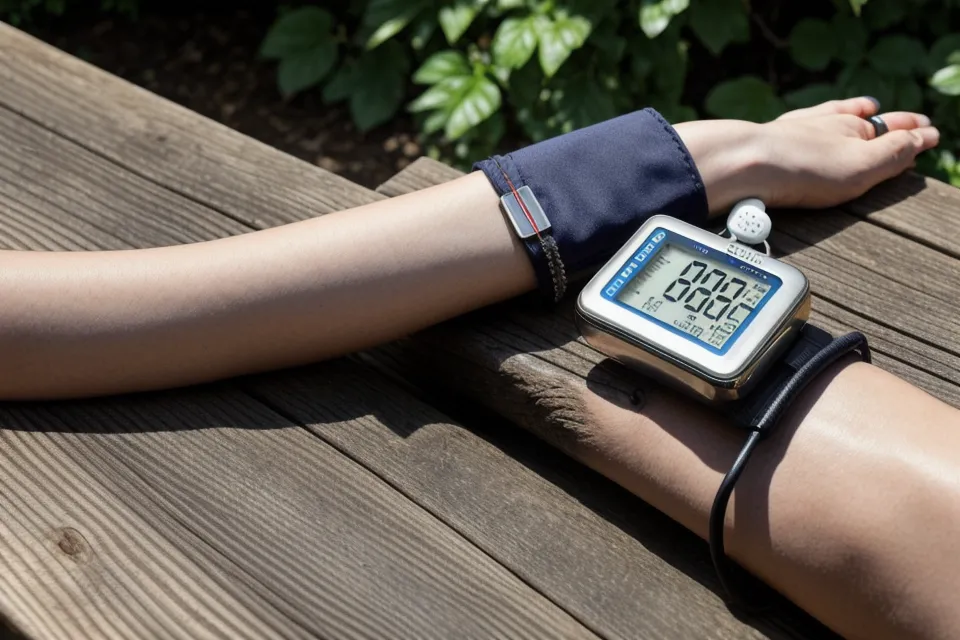
We started with the standard blood panel. Part of it includes a screening item specific to men our age, and I just wanted to confirm it hadn't quietly been skipped because I "looked" healthy walking in. Then there's blood pressure — the American Heart Association still treats 120/80 mmHg as the number to aim for, and mine has been drifting up, probably thanks to one too many backyard beer nights and not enough vegetables on the grill. We also checked fasting glucose, and the CDC and ADA still flag 100 mg/dL as the line where prediabetes conversations start, which made my 3 p.m. crashes feel a lot less mysterious. I've actually written before about my afternoon slump solution and what actually helped once I started paying attention to these same numbers.
There's also a decent chance some of that afternoon crash is just testosterone doing what it does after 50, and I made sure that was on the table too. Half the trick these days is figuring out whether a symptom is actual aging or just a rough stretch at work, and I've stopped assuming it's always the second one.
Is Your Blood Work Hiding the Real Story?
Most doctors will glance at your cholesterol, nod, and send you on your way if the numbers look fine. Blood work alone misses a lot about what's actually happening to a man's body past 50.
I told him straight — I don't just want to be "not sick," I want to carry a bag of mulch up from the driveway without needing to sit down afterward. Grip strength and leg muscle, it turns out, tell you more about where you'll be at 70 than your cholesterol number ever will. I've been looking into how to boost metabolism after 50 without cardio, and it keeps circling back to keeping muscle on the frame rather than any trick.
We also touched on circulation, since cold hands and feet stop being a personality quirk once you're past 50. My doctor stopped typing, turned his chair around, and we spent the next ten minutes talking about resistance training instead of another prescription.
Everything I Bring Into the Doctor Visit Now
The list itself isn't complicated. I ask for the actual trend on a number, not just whether I'm "in range" on one single day. If my glucose is sitting near that 100 mg/dL line, I ask about an A1c test instead of shrugging it off. If my recovery from a hike has slowed down, I say so out loud instead of quietly blaming it on getting old and leaving it there.
Sleep came up too — not the specifics, just the honest pattern of good nights versus rough ones, since that tells a doctor more than a vague "I'm tired" ever does. How sharp my head feels by mid-afternoon matters just as much to me as any blood number, so that got mentioned as well.
Bloating after meals is a small thing until it isn't, and it's worth saying out loud instead of just blaming whatever I ate. None of any of this sticks without an actual morning routine, so I described what mine actually looks like instead of what I wish it looked like.
At this elevation, staying properly hydrated is its own project, and I finally admitted I'd only recently started treating it like one instead of an afterthought. Even footwear came up, since the wrong shoes on a long walk with the dog will wreck a grown man's feet by 50 in a way they never did at 30.
The morning stiffness in my hands and knees led to a real conversation about anti-inflammatory foods for joint stiffness and whether my mobility needed an actual plan instead of good intentions. I've also gotten pickier about reading what's actually in a supplement bottle instead of trusting the label copy. And I've cut back on leaning on caffeine to punch through the afternoon slump, which turned out to be its own small negotiation.
One Thing Worth Remembering After 52
Walking out to the parking lot afterward, I actually felt different for once — less like I'd dodged a bullet and more like I'd been an actual participant in my own appointment.
The dog still thinks a three-mile loop is a light snack. Some mornings I still feel every one of my 52 years before I've even had coffee. But I have a plan now, and a piece of paper with actual specifics on it instead of a vague feeling I can't quite explain.
One thing I'd tell any guy heading into his own physical: don't walk in with a feeling, walk in with three specific sentences — what changed, when it changed, and what you've already tried about it, if anything. That's the difference between a doctor who nods along for fifteen minutes and one who actually leans in.