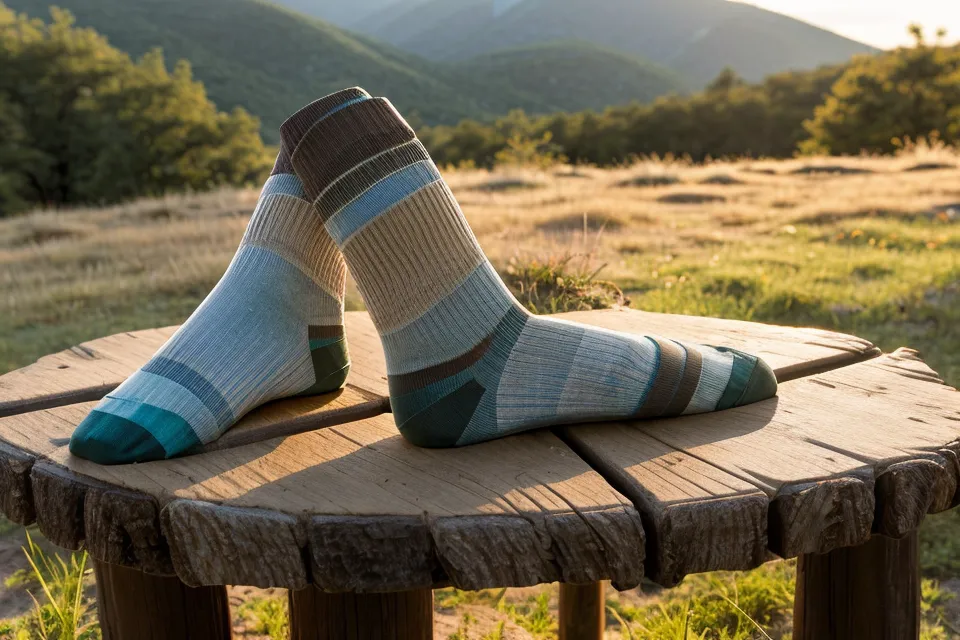
The skin on the back of my heel split into a blister about three miles into a climb, no warning, just a hot sting that stopped me mid-stride.
Bear Creek Trail near Morrison is where it happened, the kind of climb I used to walk without giving my socks a second thought. Max, my golden retriever, was already three switchbacks ahead, more interested in trail smells than my foot situation. My doctor has a favorite line for moments like this — "well, at your age" — and in three years of testing my own gear and habits, I've gotten pretty good at avoiding having to hear it.
Not everything I've tried has worked out. A daily fitness tracker app lasted eight days on my phone before I gave up on logging every step. Hiking socks turned out to be a far better use of my attention, and a lot less tedious to keep up with.
Cotton Socks Stopped Working Somewhere Around Fifty
For most of my adult life, hiking socks weren't a decision at all. I'd grab a multi-pack of plain white crew socks from the warehouse rack, lace up whatever boots were by the door, and head for the foothills. That worked fine through my thirties and well into my forties.
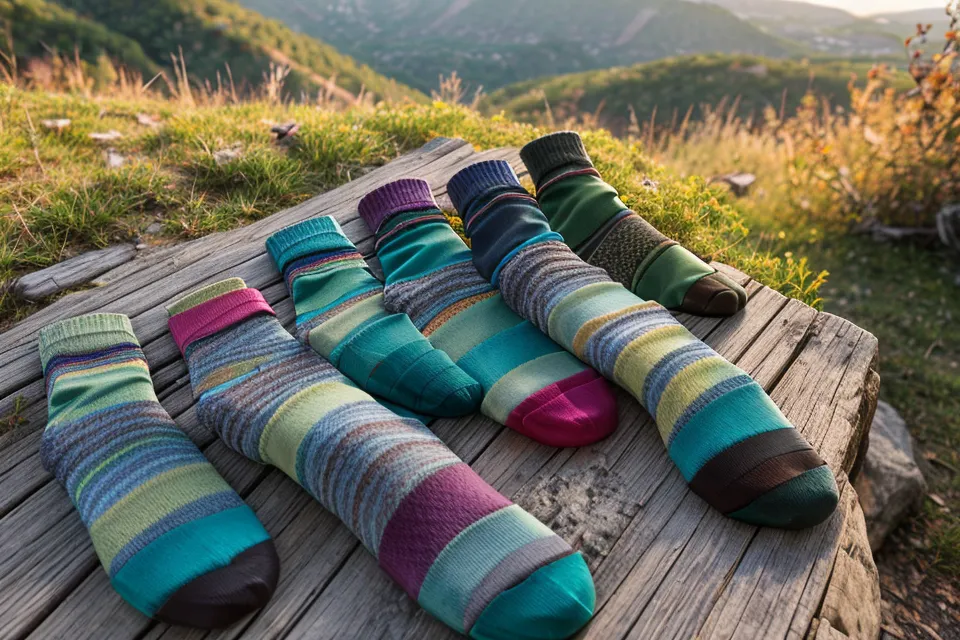
Feet don't bounce back the same way past fifty. Skin gets thinner and drier with age, plain and simple, and it doesn't shrug off the same beating it used to. Pair that with a damp cotton sock dragging across it for four miles and you've built yourself a blister factory.
None of this makes me any kind of foot specialist, and I want to be clear about that. If you're dealing with diabetes, neuropathy, or any chronic foot condition, this is exactly the kind of detail to run by your own doctor before you change up your gear.
Cotton makes the problem worse before it makes it better, too. It soaks up sweat and holds onto it, so by the second mile you're not really wearing a sock anymore — you're wearing a damp rag with a logo on it. That part took me three decades of weekend hikes to notice.
What Actually Causes the Rubbing
Fabric turned out to be the first real variable worth separating out. High-grade merino wool behaves nothing like cotton or synthetic blends — it pulls moisture vapor into the fiber's core while keeping the outer surface against your skin relatively dry, so your foot isn't sliding around in a slick film of sweat. Good trail socks spin that wool fine, usually down around 18.5 microns, which is why they feel nothing like the scratchy sweaters our grandfathers wore.
Seam placement mattered almost as much. Older athletic socks run a raised seam right across the tips of the toes, and on a steep downhill that seam acts like a tiny rasp against your nail beds every time your foot slides forward in the boot. Flat-knit or seamless toe closures on real trail socks get rid of that ridge entirely, and that turns out to be the difference between a comfortable descent and a wrecked big toenail.
Loose footing inside the boot doesn't stay contained to your feet, either. When a sock lets your foot slide around, your knees end up doing extra stabilizing work on every uneven step, and mine let me know about it on long descents. Around that same stretch of trail, I started paying closer attention to the best knee braces for hiking over 50 on rocky trails, and the link between stable footing and quiet knees got obvious fast.
My neighbor Gus caught me lining up five different sock pairs along the porch rail one Saturday like I was defusing something dangerous, and just shook his head and went back to his own yard work.
Is Thicker Always Better? Not Even Close
Here's the thing about hot spots: the obvious fix isn't always the right one.
That was my instinct once hot spots started showing up — buy the thickest, heaviest, most cushioned expedition socks on the shelf. More padding between an aging heel and a hard boot seemed like simple math.
It was a mess.
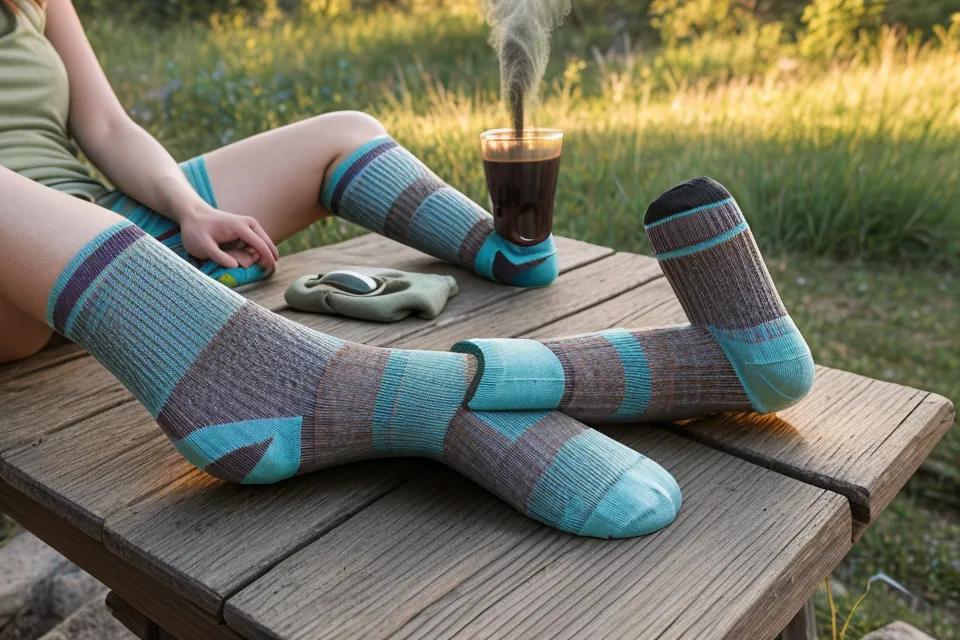
Overdoing the cushion backfired twice over. Extra bulk squeezed my toes together and killed the breathing room inside the boot, and all that dense fabric trapped heat like a tiny attic, which only made the sweat problem worse — a bit like stuffing an extra floor mat under the gas pedal because it felt like more protection, right up until it started getting in the way. Thick socks also tend to bunch up in the heel cup on steep switchbacks, and a wad of bunched fabric behind the ankle creates its own pressure point, right over the Achilles, which is exactly where you don't want one.
Mid-density beat heavy every single time: targeted cushion under the heel and ball of the foot, a ventilated mesh weave across the top, and a snug band around the midfoot to keep everything anchored.
The Arch Band Nobody Mentions
A well-built trail sock isn't just a knitted tube — it's closer to an engineered sleeve. Most blend a high percentage of merino wool with a nylon shell for abrasion resistance and roughly 3 percent elastane for shape retention, and that last number matters more than it sounds like it should.
Elastane is what keeps a sock from sliding down your calf two hours into a hike. Once a sock loses its grip and bunches up behind the heel counter, a blister is usually close behind, sometimes within twenty minutes.
The best socks back that elastane up with a ribbed compression band wrapped around the arch, anchoring the sock to your foot so any sliding happens between the sock and the boot lining instead of between the sock and your skin. Good footing matters past the sock itself, too — pairing solid foot support with simple core exercises for men over 50 to prevent lower back pain keeps your stride even, so you're not quietly dragging extra weight onto one heel.
Four Rules I Follow Before Every Hike
None of this requires an expensive gear overhaul or a trip to a specialist. Mid-weight beats heavy-weight almost every time — a roomy toe box breathes better than one stuffed with padding that traps moisture and bunches on the climbs. Fine merino, somewhere around that 18.5-micron range, paired with a touch of elastane, stays glued to your foot instead of sagging by mile four. A seamless toe box is non-negotiable if you do any real downhill walking, since that's exactly where a raised seam turns into a nail-bed problem. And wash them inside-out — it fluffs the fibers back up, knocks loose the dried sweat salt, and keeps the wool springy instead of flat.
These days Max drags me up the hill two blocks from the house every morning before I've had coffee, and I don't brace for the first few steps the way I used to. Getting your feet to behave past fifty isn't about stiffer boots or a jar of petroleum jelly in the gear closet. It comes down to managing moisture, cutting down on slippage, and skipping the marshmallow-thick socks that feel like a good idea in the store and a bad one three miles in.