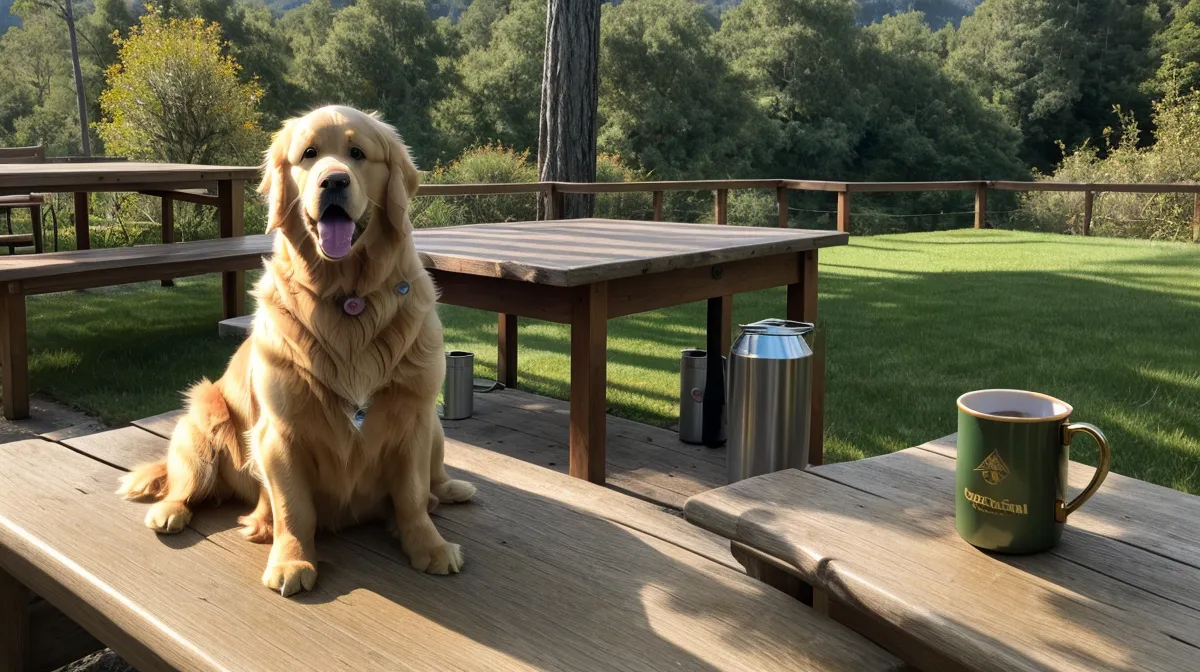
Your legs feel fine raking the yard at noon, but turn into two sandbags with sluggish circulation the second you step onto a trail at Red Rocks Park in Morrison for a morning hike before the sun's even up. I was standing at the trailhead with that exact problem, golden retriever already ten feet ahead and practically vibrating, while I bent over rubbing my calves like I was trying to restart an old lawnmower.
A reader named Carl Winstead emails about mornings like that more than almost anyone else on this site, and he does something I respect: he keeps a running note on his phone of what actually helped his energy and circulation versus what did absolutely nothing. That's the real question buried in his messages, and it's the same one I get asked constantly by guys over 50 standing around at the trailhead. There are basically two schools of thought for fixing legs that feel dead at sunrise, and I've given both of them a real shot.
Two Camps of Advice for Men Over 50 With Dead Legs at Sunrise
The first camp says the problem lives in the morning. Fix it the second you wake up, before you ever put boots on. The second camp says the real damage is already done by the time your alarm goes off, and the fix belongs the night before. My own doctor leaned toward camp two without ever using those words. During a routine physical, I told him my legs felt hollow and wooden before breakfast even on nights I slept fine, and he said something simple: blood doesn't move around on its own while you're lying flat for eight hours, and in guys our age that sluggishness can carry right into the morning. He didn't get more specific than that, and neither will I. I'm not a doctor, and if you're dealing with sudden swelling, real pain, or skin changes in your legs, that's a conversation for your own physician, not a blog written by a guy who tests supplements on his dining room table.
Morning Fixes Are Too Late for Your Circulation
Camp one is what every hiking forum and fitness magazine tells you to do: stretch the second your feet hit the floor. I did the full routine for a good while. Heel drops off the stair landing. Towel pulls for my toes. A foam roller that felt like a medieval device, dragged across my calves on the living room rug while the dog sniffed my face like I'd lost my mind.
Nothing happened. If anything, my calves felt angrier on the trail afterward, not looser. Figuring the stretching just needed an assist, I also tried knocking back one of those 5-hour energy shots from the gas station before a hike, on the theory that if I couldn't warm my legs up, I could at least force the rest of my body to ignore them. That worked about as well as you'd expect: jittery hands, a slight headache by the second mile, and calves that still felt like two sacks of wet sand.
My buddy Ted Grabowski, who tracks his daily step count like it's a competitive sport, told me stretching was obviously the answer and that I probably just wasn't doing it hard enough. Ted's wrong about a lot of things involving numbers on his phone, and he was wrong about this one too.
Here's the mechanical reason, as best I understand it without a medical degree: your calf muscles work like a pump for blood heading back up toward your heart, something doctors call the skeletal-muscle pump. Stretching a cold muscle doesn't really switch that pump on, because there's no real contraction happening, just a slow pull on tissue that's still half asleep. It's a bit like flooring a cold diesel engine on a frosty morning. You're not lubricating anything, you're just grinding parts that haven't warmed up yet.
What Actually Changed Things: Loading Up the Night Before
Camp two flips the timing entirely. Instead of trying to jolt dead legs awake right before a hike, I load them the evening before. I grab a heavy dumbbell, stand on a block of wood in the garage, and do slow calf raises, pausing at the top and lowering for a slow count instead of bouncing through a quick set.
I won't pretend I fully understand the physiology. Something about muscle tissue under real load signaling the body to keep local blood flow more responsive, rather than everything clamping down overnight. I paired the calf work with some of the same approach I use for simple resistance training for regular guys who want to stay strong: slow, heavy, and over quickly, not some hour-long ordeal. What I can tell you is what I noticed. My calves on a hike morning after an evening loading session feel nothing like my calves on a morning after a few days of nothing but desk-sitting.
A few small habits stack on top of that evening work. The drive out to Red Rocks involves sitting with my knees bent for a while, which pools blood right where I don't want it, so I wear over-the-calf compression socks for the ride and switch into trail gear at the parking lot. That's the same logic I landed on while testing the best hiking socks for men over 50 to prevent blisters: the right layer on your lower leg matters more than people think. Once I'm actually at the trailhead, I walk flat ground near the entrance for a few minutes before hitting any incline, and I roll my ankles in both directions a couple dozen times. Neither of those takes more than five minutes combined, but they let the calf pump start firing gently instead of asking it to go from zero to steep grade in one step.

Fluid matters too, though I won't pretend to have a precise formula for it. Colorado air is dry enough that it's easy to run behind without noticing, and going to bed even mildly dehydrated seems to make blood move more sluggishly through your legs by morning, same as thick oil moves slower than thin oil in the cold. I shifted most of my drinking earlier in the day instead of cutting it off entirely, and I prop my feet up against the headboard for a few minutes most mornings while the coffee brews, just to let gravity help drain things out before I stand up.
I actually sketch comparisons like this out on the whiteboard in my home office in Centennial, two columns, one for whatever I'm testing in the morning and one for whatever I'm testing the night before. It's propped against a window that looks straight out at the Front Range, and the dog's bed is wedged into the corner underneath, which is where he sleeps while supervising my experiments with what looks like deep disappointment. I've also written before about why I switched to liquid ProstaVive after trying too many pills, and that one was really about ditching a pile of bottles for something simpler. Same pattern here: the fewer moving pieces in your evening routine, the more likely you actually stick with it.
So Which Camp Actually Wins?
My wife actually noticed the shift before I did, which tells you something. She caught me pushing up off the couch one evening without the little grunt I usually let out, and asked what had changed, since she can normally set a clock by that sound. The honest answer wasn't anything I was doing right after waking up. It was everything I'd started doing the night before.
So here's the actual verdict, not the diplomatic one. If you've got five minutes before a hike and nothing else, do the ankle rolls and the flat-ground walk. They're better than standing at the trailhead cold, and they cost you nothing. But if you're serious about not feeling like your legs belong to someone else every morning, camp one just doesn't move the needle on its own. The loaded calf work, the earlier hydration, the compression socks on the drive over: that's the stuff that actually changes what your legs feel like at the trailhead. Morning stretching earns a spot as a light warm-up. It doesn't earn a spot as the whole plan.
Red Rocks doesn't get any flatter or any closer just because your legs finally cooperate, but at least now the ache shows up later in the hike instead of thirty yards past the truck. My dog still beats me to the top every single time. Some things circulation can't fix.